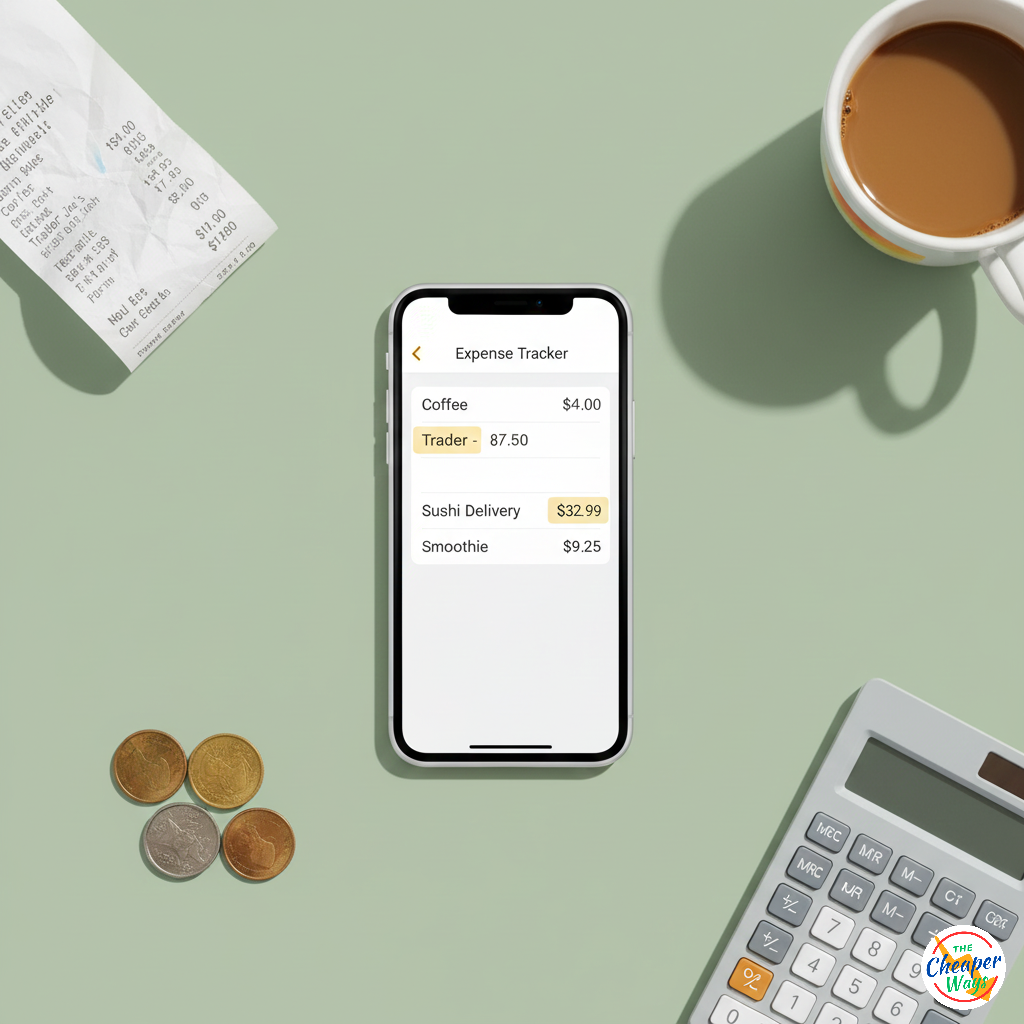
I Thought I Spent $200 on Food. My Tracker Said $280.
You know that weird feeling when you check your bank account and the number is lower than it should be?
That was me three months ago.
I had my food budget figured out. Or so I thought. I allocated $200 per month for groceries and eating out. Clean. Simple. Done.
Then I actually tracked it for 30 days.
$280.
Not $205. Not even $220. A full $80 over what I thought I was spending.
And here’s the thing that really got me. I wasn’t being reckless. I didn’t suddenly start ordering takeout every night or shopping at fancy stores. The money just vanished into what I call budget blind spots.
Those sneaky little expenses that don’t feel big enough to count.
But they add up. Fast.
The Real Problem Isn’t Willpower
Most budgeting advice sounds like a lecture. Cut this. Stop that. Have more discipline.
But that’s not how our brains work with money.
Research from expense tracking studies shows something fascinating. When people track their spending persistently, they naturally reduce their discretionary expenses. Not because someone told them to. But because awareness changes behavior automatically.
You can’t manage what you don’t measure.
I’ve heard this phrase a million times. Rolled my eyes at it too. Sounded like corporate speak.
But after tracking every dollar for 30 days, I finally got it. My budget failure wasn’t about willpower. It was about blind spots.
Where Your Money Actually Goes
Let me show you where my $80 went. These are the five blind spots I found in my own spending. And honestly, you probably have them too.
The small regular purchase you don’t count
For me, it was coffee. $4 twice a week at my local cafe. That’s $32 per month I never budgeted for. Why? Because $4 feels too small to matter. Except it does matter when it happens 8 times a month.
The impulse aisle item
You’re at the grocery store. You grab the essentials. Then you see something. A fancy snack. A new sauce. Nothing huge. Just $6 or $7. But you do this twice per shopping trip, and suddenly you’ve added $50 to your monthly food bill without realizing it.
The fees you ignore
Delivery fees don’t count as food spending in my brain. Neither do tips or service charges. But my bank account doesn’t care about my mental categories. That $5 delivery fee twice a week? Another $40 gone.
The meal you forgot
Did I already budget for that restaurant meal last Tuesday? Or was that the week before? When you’re not tracking, meals blur together. You lose count. Then you wonder why you’re over budget.
The subscription you don’t use
I had a food delivery app subscription. $10 per month. Haven’t used it in four months. Still paying for it. Why? Because I forgot it existed.
Add these up and you get exactly $80. Another full grocery run. Just gone.
How I Track Without Spreadsheets
You’re probably thinking this sounds exhausting. Tracking every single purchase?
It’s not.
Here’s my stupidly simple method. I use a notes app on my phone. That’s it. No fancy spreadsheets. No complicated apps with 47 features I’ll never use.
Every time I spend money on food, I add one line. Date. Place. Amount. Takes 10 seconds.
End of the month, I scroll through and add it up. Or I use a simple calculator to total everything.
That’s the whole system.
Could I use a budgeting app? Sure. Some people love them. But I found they added friction. Too many categories. Too many steps. I’d forget to log things.
My phone notes app is always with me. It’s fast. It works.
What Changed When I Started Tracking
The guilt disappeared first.
Before tracking, I felt like I was failing at budgeting. Like I had no self control. Why couldn’t I stick to $200?
But tracking showed me the truth. I wasn’t failing. My budget was just wrong. I was spending $280 because that’s what food actually costs in my life right now.
Once I saw the real number, everything shifted.
Did I want that $4 coffee twice a week? Actually, yes. It’s my Friday morning treat. Worth it.
Did I want the subscription I forgot about? Absolutely not. Cancelled immediately.
Did I want to keep impulse buying things in the grocery aisle? Not really. Now that I see the cost adding up, I pause before throwing random items in my cart.
The choices became obvious. Not because I was trying harder. But because I could finally see what I was choosing.
Studies on expense tracking behavior confirm this pattern. People who track consistently show reduced discretionary spending naturally. The act of recording creates awareness. Awareness creates different choices.
You start choosing your spending instead of accidentally spending.
Start With One Category
Don’t track everything at once. That’s overwhelming.
Pick one category. Food is perfect because you spend on it frequently. You’ll see patterns fast.
Track it for 30 days. Just that one category. Write down every food purchase. Groceries. Coffee. Restaurants. Delivery fees. Everything.
At the end of 30 days, add it up. Compare it to what you thought you were spending.
I bet you’ll find a gap. Maybe not $80 like mine. Maybe $30. Maybe $150.
But you’ll find something.
And once you see it, you’ll know exactly where your money is actually going. Not where you think it’s going. Not where you hope it’s going. Where it’s really going.
That’s when real change happens.
FAQ About Spending Trackers
Do I need a special app to track spending?
No. A notes app on your phone works perfectly. If you want something fancier, try free apps, but don’t let the tool become a barrier to actually tracking.
How long should I track before I see results?
Track for at least 30 days to see meaningful patterns. One week isn’t enough. You need a full month to catch subscription charges, irregular purchases, and typical spending cycles.
What if I forget to log a purchase?
Check your bank statement or credit card app at the end of each day. Fill in anything you missed. It takes two minutes and keeps your tracking accurate.
Should I track every single category or just one?
Start with one category, especially if you’ve never tracked before. Food is easiest because you buy it often. Once that becomes a habit, add another category if you want.
Will tracking make me feel guilty about spending?
The opposite happens. Tracking removes guilt because you’re seeing reality instead of judging yourself against an imaginary standard. You’ll make conscious choices instead of feeling like you’re failing.
How do I use tracking data without feeling overwhelmed?
Look for patterns, not perfection. Where do blind spots show up? What surprises you? Pick one thing to adjust. You don’t need to fix everything at once.
Your Turn
So here’s what I want to know.
Have you ever tracked your spending for a full month? What did you find?
Or if you haven’t tracked yet, which category do you think has the biggest blind spots in your budget?
Drop a comment below. I read every single one. And honestly, hearing about other people’s budget surprises makes me feel way less alone in this money thing.
Start tracking today. Pick one category. Give it 30 days.
You might be surprised at what you find.